
 |
 |
 |
 |
 |
 |
 |
 |
 |
 |
|
||||||||||
|
||||||||||
| Heights Heritage Tour |
 |
||||||||||||
2285
Coventry (1982, 2003) |
||||||||||||
| Many tour-goers will be surprised
to discover that this recently-designated Cleveland Heights Landmark is
no longer the “Coventry Convent.” It was, after all, owned by
St. Ann Church from 1948 through 1983. Since then, the home has changed
owners several times. However, the current residents have given it a “life”
not seen since it was occupied by the family of banking executive Joseph
Nutt more than 50 years ago.
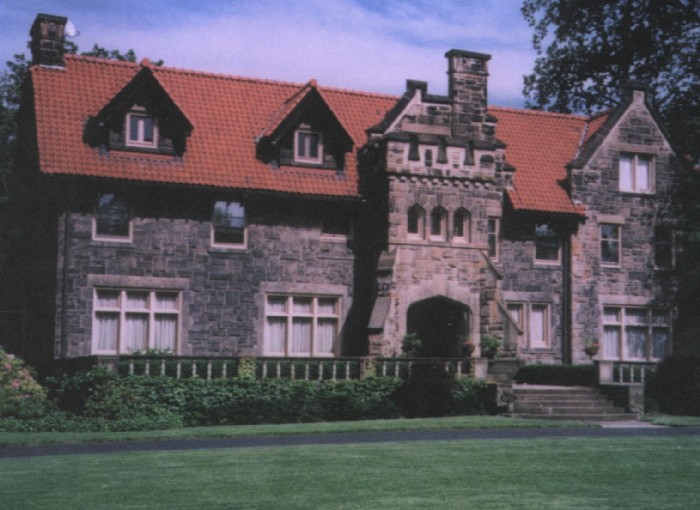
Built around 1910, the house was designed for Mr. Nutt by Harlen E. Shimmin, a widely known architect who designed at least eight homes along Fairmount Blvd., as well as numerous theatres, auditoriums, schools and apartments. The property originally ran through to Stillman and actually included 50 percent more frontage on Stillman than on Coventry. Large formal gardens, pools and other features clearly gave the feeling of a country estate. The main rooms of the house reflect a variety of architectural detail that is delightfully incongruous with the English manor appearance of the exterior. Part of the reason is that the Nutt family apparently took an extended vacation to Europe in the late 1920s. Inspired by the architecture encountered in their travels, they redid much of the home, replacing the dark, somewhat heavy, interior with a lighter Italianate look. Elaborate oak panelling was installed in the dining room and the original beamed ceilings were replaced with sculpted plaster. The stone porch on the north side of the home also was added around that time. Many of the home’s original features did survive the redesign. Principal among these is the fantastic wrought iron grillwork that graces the front door. It was concealed for many years by a storm door, and uncovered only recently by the current owners. Similarly elaborate grillwork—all commissioned from the Rose Iron Works of Cleveland—adorns the door in the back foyer, as well as many of the heat registers throughout the house. (A Rose fireplace screen is on exhibit at the Cleveland Museum of Art.) Other examples of the home’s elite heritage are evident. For example, hidden doors and work areas are abundant, making it possible for the original owner’s servants to keep things running smoothly yet invisibly. Far more unusual is the location of the home’s steam boiler: in the basement of the detached garage! Most likely, this was done to minimize noise or perhaps to avoid the dirt and soot that accompany a coal-burning heating system. Interestingly, an overly segmented three-room kitchen was not opened up until the mid 1990s, when one large, open area was fashioned. Much of the cabinetry installed at that time was salvaged from another Cleveland Heights estate. The current owners have improved on that renovation and added many of their own touches throughout the house, including the recasting of a living room fireplace, the unobtrusive installation of whole house air-conditioning, and the finishing of several bedrooms and baths. Because of these well-conceived efforts, the house remains faithful to its elegant, early-20th-century roots, but also accommodates the 21st century’s reverence for comfort, convenience and flexibility. Look for: |
||||||||||||
 |
||||||||||||
|
||||||||||||