
 |
 |
 |
 |
 |
 |
 |
 |
 |
 |
|
||||||||||
|
||||||||||
| Heights Heritage Tour |
 |
||||||||||||
3027
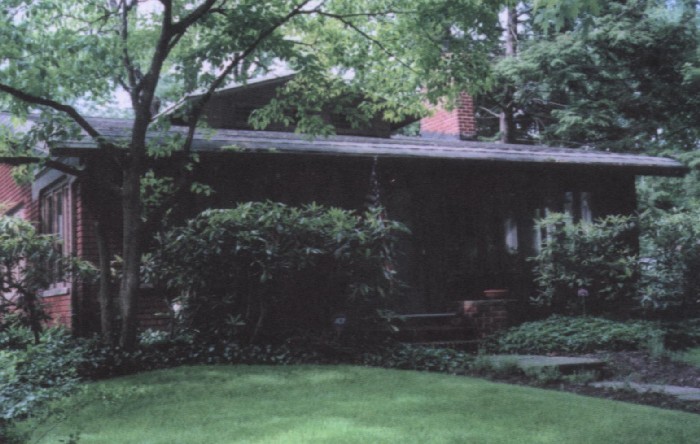
Corydon (2003) |
||||||||||||
| Purchased in 2000 by the former
owner of 1737 Andrews Court (a highlight of the 2000 Heights Heritage Tour),
this home is a different sort of standout. Often mis-categorized as a ranch,
the owner prefers to call it a bungalow or a large cottage.
Whatever its proper title, this is a home with more visual high points
than one usually sees in a dwelling of moderate size. High on the list
of unique features are 11 different types of marble, leading to the owner’s
(highly logical) assumption that this 1920s structure was occupied previously
by someone “in the business.” Marble’s first appearance
is in the floor of the enclosed porch, where three different types were
used. There also is a border made of marble that gives the appearance
of carpet. The porch apparently was enclosed a long time ago, given the
age of the brass fixtures on the windows. It currently functions as the
owner’s office and projects a wonderful openness, partly due to
its picture-window connection to the living room behind it. But scores of (non-marble) modifications also have been made to this gem. High on the list is its parquet-like floor stenciling, which first appears in the sunroom. Done by local artist Laurel Herbold, the floors then were urethaned to preserve the art. Even more extensive stenciling was done in the dining room. A magazine cover inspired the design, which resembles the face of a compass. The dining room also has original built-in cabinets with leaded glass. The exposed beams in the dining room were painted to match the other wood accents. Of further interest, the kitchen has glass walls, called Vitrolite. The pattern on the kitchen walls was used to make the stencil in the hallway and kitchen floors. The present owner added the stainless steel appliances. The walls in the bathroom also are glass. Because of this, the showerhead had to be installed in the ceiling. And of course, the bathroom’s baseboards are made of (that’s right) marble. Further floor stenciling is evident in the master bedroom, which contains
the owner’s collection of Audubon prints. A second bedroom (not
original to the house) contains a large antique bed—a family heirloom. From the enclosed back porch, visitors move to an anti-yard, designed and installed by the current owner. Instead of grass it contains a stunning array of lush plantings, a pond, a small shrine, and even an elaborate gravestone for a previous owner’s pet. How much doubt could there be that Breeze (perhaps a dog or cat) and its master(s) were right at home in this unique dwelling. After all, marble is a “breeze” to clean. Look For: |
||||||||||||
 |
||||||||||||
|
||||||||||||